
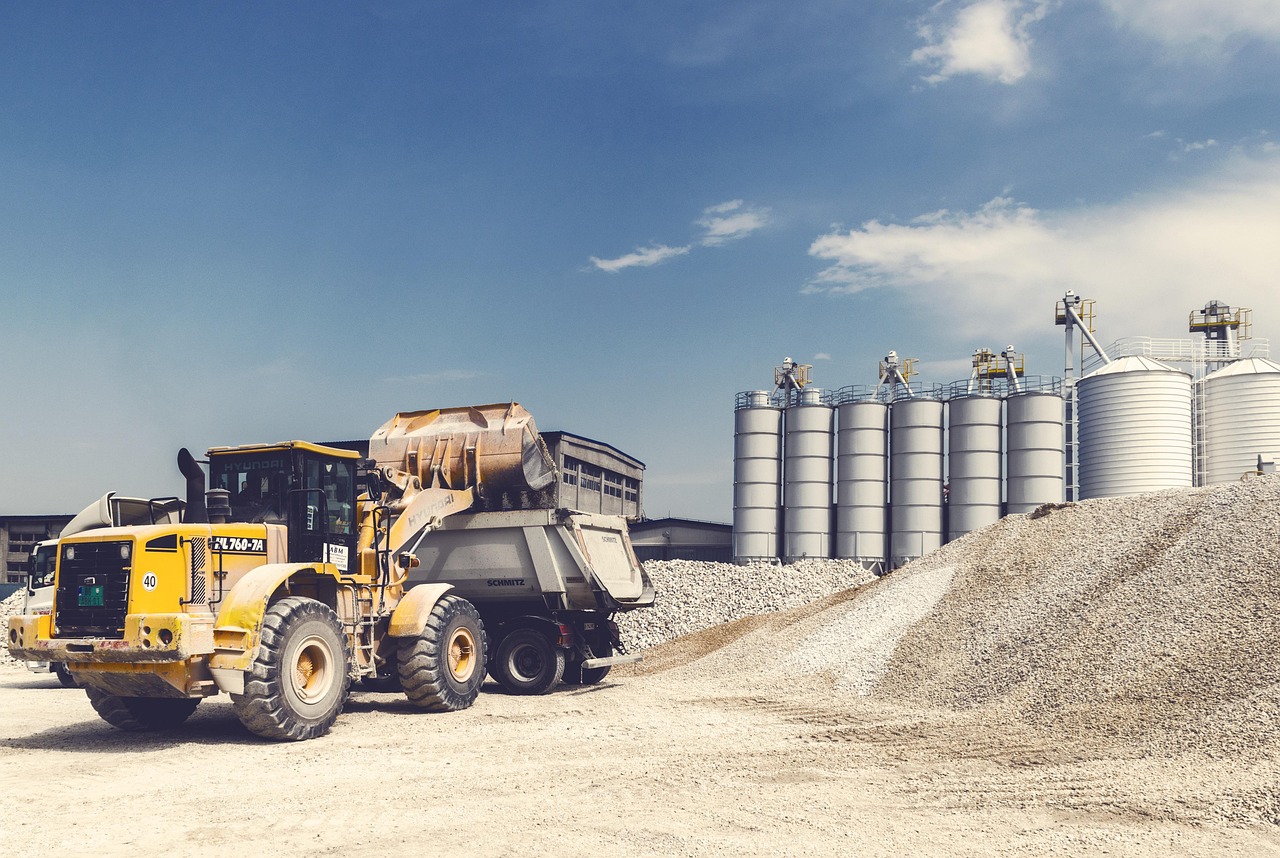
Operate with confidence under NHVR and HVNL.
The NHVR aligned Chain of Responsibility SMS platform Australian fleet operators use to prove Primary Duty due diligence every load, every driver, every site.
Master the Critical 6
The Heavy Vehicle National Law (HVNL) mandates strict compliance across six critical risk areas. Our platform provides continuous operational monitoring for every single one.
Speed Management
Monitor telemetry and trip schedules to ensure compliance with speed limits.
Fatigue Management
Track work/rest hours, BFM/AFM rules, and fitness for duty.
Mass Limits
Validate load weights against vehicle and network limits.
Dimension Limits
Ensure loads comply with width, height, and length regulations.
Load Restraint
Verify restraint methods and equipment suitability.
Vehicle Maintenance
Track inspections, defect reporting, and servicing schedules.
A live operating picture of your CoR posture
The Operator Dashboard surfaces the metrics regulators and executives ask for first — Primary Duty score, external risk exposure from your contractor chain, the Critical 6 radar, audit pipeline, and open incidents — all on one screen.
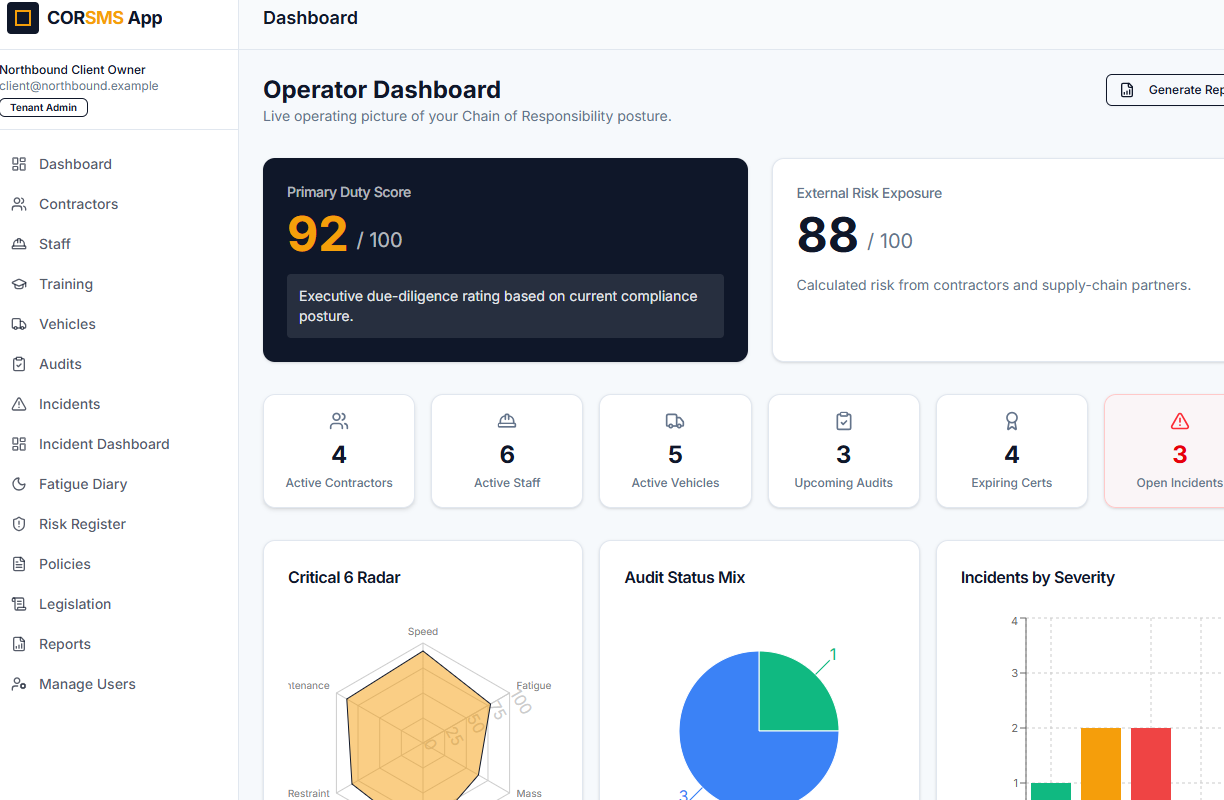
Operator Dashboard — the same view your tenant admin sees on day one.
Every kilometre starts with a decision
Schedules set in an office decide whether a driver rests at dusk or pushes on. We help you find those decisions, put sensible controls around them, and prove they work.
Consulting maps your transport activities against the 2026 NHVR Master Code guidance. Independent audits sample the evidence and rank what to fix first.
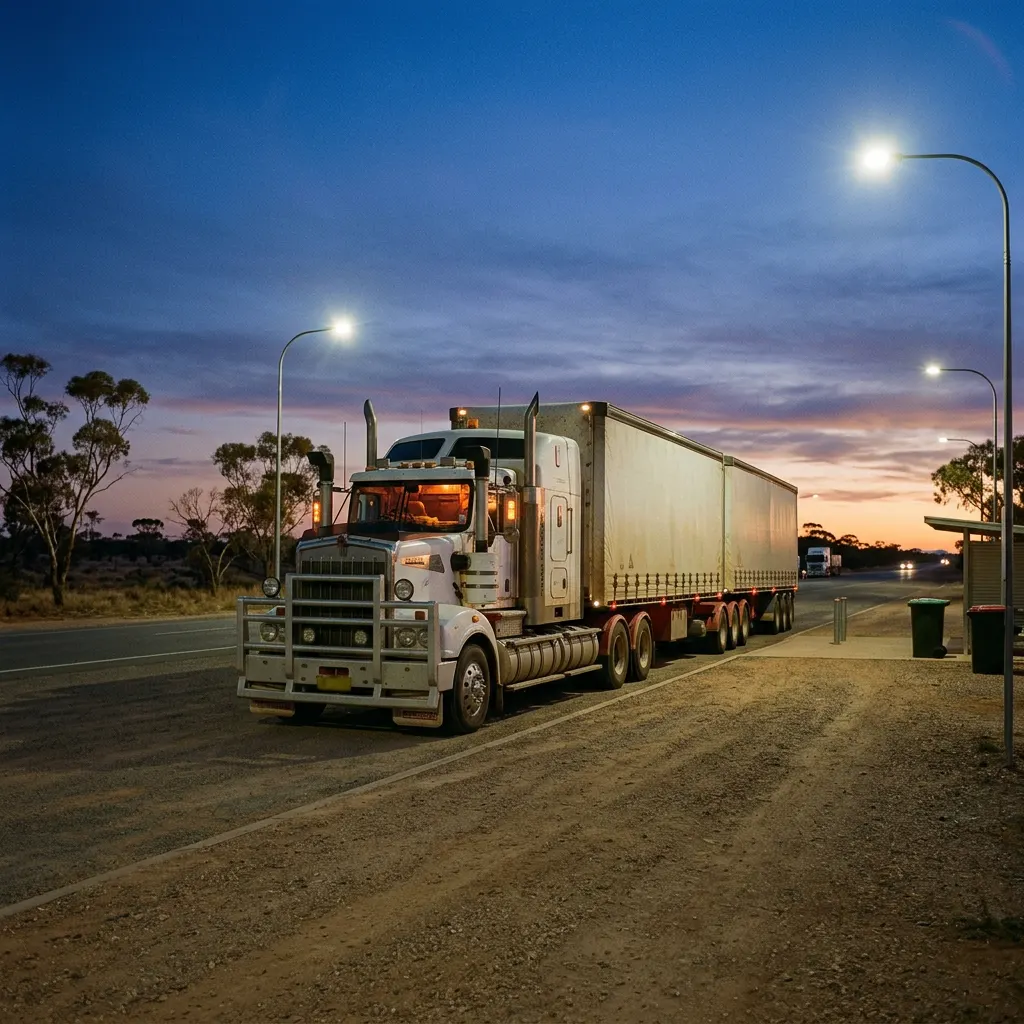
This week in Chain of Responsibility
NHVR and ALC developments, HVNL changes, and enforcement trends — analysed weekly so your duty of care stays current.
AI-generated illustration — not a photograph of the event.
Why route risk is becoming a frontline CoR issue under the HVNL
Route selection is no longer just an operational choice. Under the HVNL, the way businesses plan roads, structures and local restrictions can directly affect fatigue, mass, speed and safety outcomes.
Read insightAI-generated illustration — not a photograph of the event.
ALC policy debate is reframing return loads as a safety and compliance decision
Pressure to lift freight efficiency is pushing more focus onto backloading and asset utilisation. But return-load decisions can create CoR risk when they override compatibility, restraint, timing and site-control realities.
Read insightAI-generated illustration — not a photograph of the event.
HVNL reform discussion is increasing pressure to align board reporting with operational risk
Reform discussion is sharpening around how businesses govern safety from the top. For operators, that means board and executive reporting must reflect real HVNL risk, not just lag indicators and broad assurance statements.
Read insightAI-generated illustration — not a photograph of the event.
What prosecution patterns suggest about unsecured process around vehicle substitutions
When one truck or trailer is swapped for another, hidden CoR risk can follow. Prosecution patterns show that seemingly routine substitutions can expose failures in access, maintenance, mass, fatigue and loading controls.
Read insightAI-generated illustration — not a photograph of the event.
NHVR attention to coupling security is a reminder that simple tasks carry serious CoR consequences
Coupling and uncoupling can be treated as routine yard work, but the safety stakes are high. NHVR attention to foundational pre-departure controls is a reminder that basic execution still matters under the HVNL.
Read insightTrusted by Industry Leaders
Operators relying on us for their primary duty of care.
"When the regulator walked into our depot, we put COR.systems on the screen. The conversation was over in twelve minutes."
"The Critical 6 monitor catches fatigue and mass exposures before they leave the yard. That alone has paid for the platform ten times over."
"We finally have evidence — not just policies — that our executive team is discharging Primary Duty."